
Commentary by Ethan James Farrell, Founder, Sensus InVista
“The power of AI shouldn’t take priority over human life; any benefit AI brings to humanity can only be realised if humanity is considered throughout its development.”
Decentralisation and disruption of monopolistic control
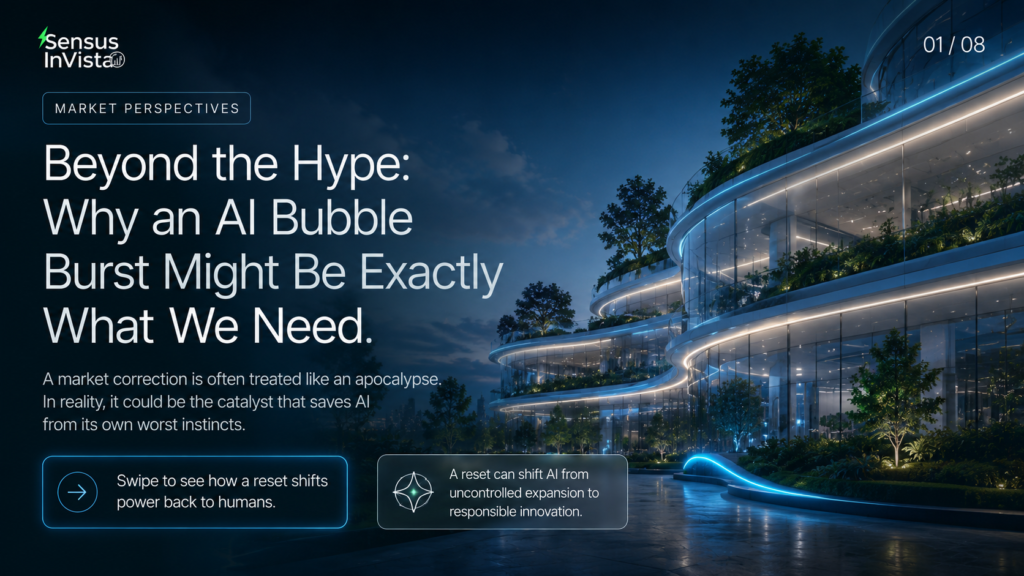
An AI bubble burst could decentralise power away from dominant players in the field. This disruption might encourage open source models to become the preferred approach, particularly as individuals and organisations seek alternative providers following investment disruptions. China’s AI landscape and the potential of open source models demonstrate that innovation need not be concentrated in the hands of a few power players.
Environmental and community benefits
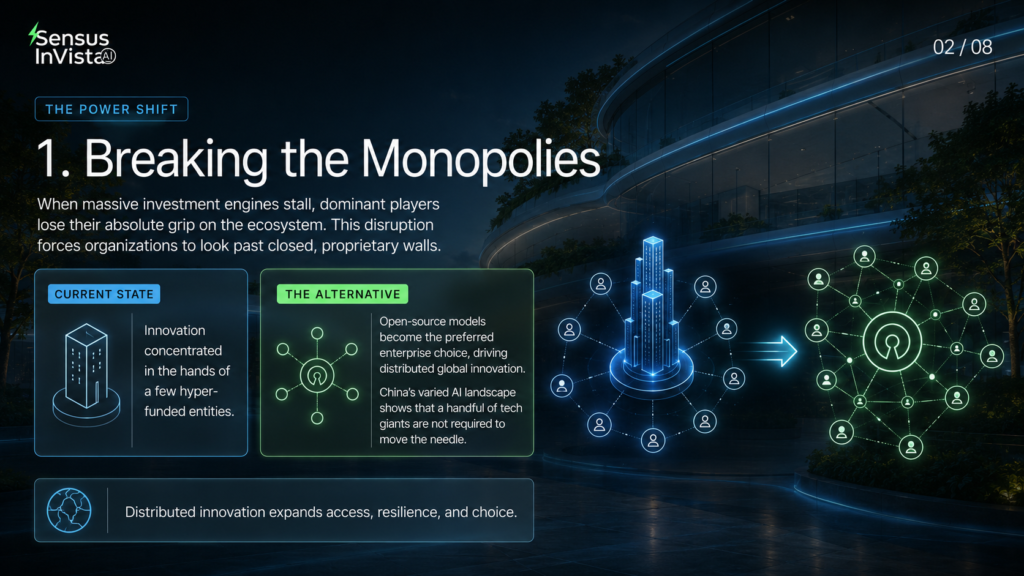
If the bubble bursts, plans for heavily disliked data centres could be disrupted, reducing negative environmental impact and alleviating community concerns. These large-scale infrastructure projects often add a layer of disdain towards AI amongst the public, so scaling back could improve perception and community health.
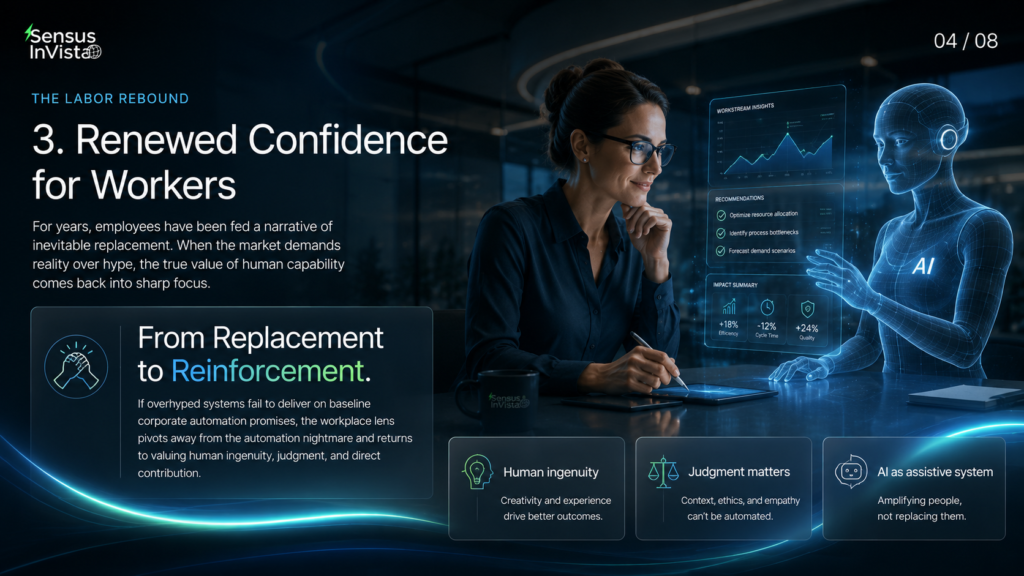
Renewed confidence for workers
If AI fails to deliver promised benefits in working environments, a bubble burst might reignite confidence in human workers. Rather than viewing AI as a job-taking automation nightmare, the focus could shift back to valuing human capability and contribution.
A market refocus would encourage reinterpretation of what AI should mean to society. Rather than positioning it as an apocalyptic, data-hungry, all-encompassing system, AI could be understood as an assistive technology that helps people do better and live better. This reframing mirrors past technology shifts, where initial hype gave way to more measured, practical applications.
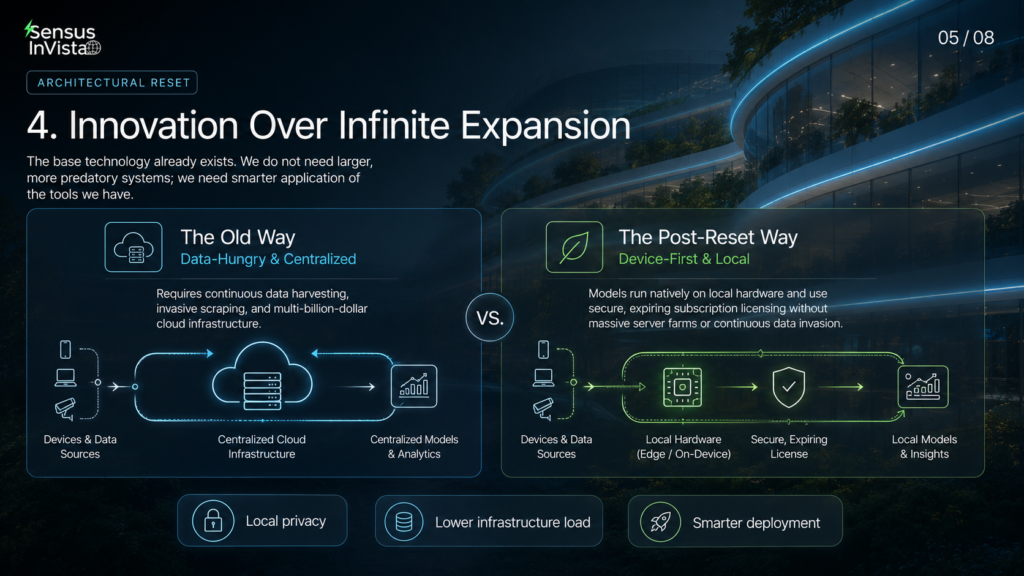
Innovation over expansion
The core argument isn’t advocating for market disruption (which would harm institutional investors, pensions, and working people), but rather prioritising innovation over continued expansion. The technology exists; the focus should be on innovating with it and decentralising its power and consumption. This could include device-first models with licensing approaches, where models are available locally and expire when payment expires, rather than requiring constant data harvesting and centralised infrastructure.
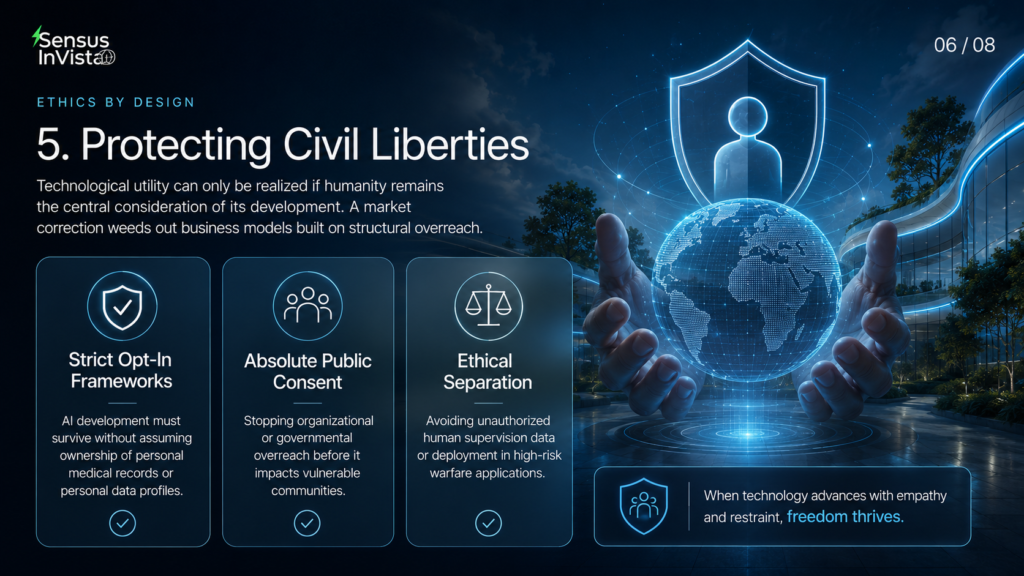
Protecting civil liberties and human rights
AI development shouldn’t require breaching civil liberties, assuming medical data, diminishing rights, or enabling organisational or governmental overreach. It should be opt-in and shouldn’t negatively affect communities and environments through unnecessary data centres driven by monopolistic control. The power of AI shouldn’t take priority over human life; any benefit AI brings to humanity can only be realised if humanity is considered throughout its development.
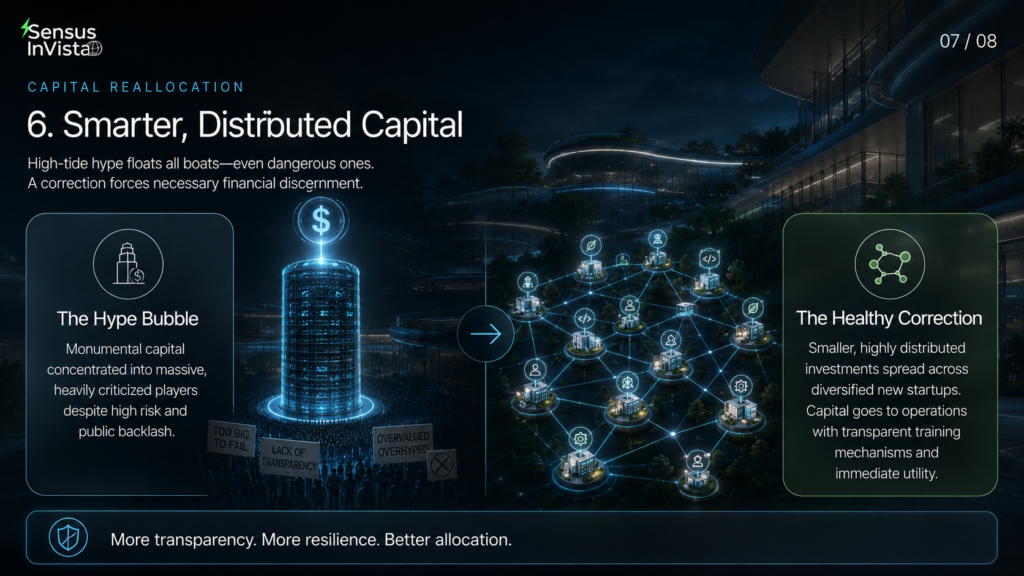
Additional investment perspective points
More discernment in investment would lead to less risky choices. An AI bubble burst could result in smaller, more distributed investment across new businesses, which would be better for smaller operations and startups. There would be less focus on larger players whose technology is criticised widely. An AI bubble burst could reduce investment in what would be seen as risky businesses based on public perception. This particularly applies to technology where training mechanisms or applications are rooted in unauthorised human supervision or, at the extreme end of the scale, an active genocide/war efforts.
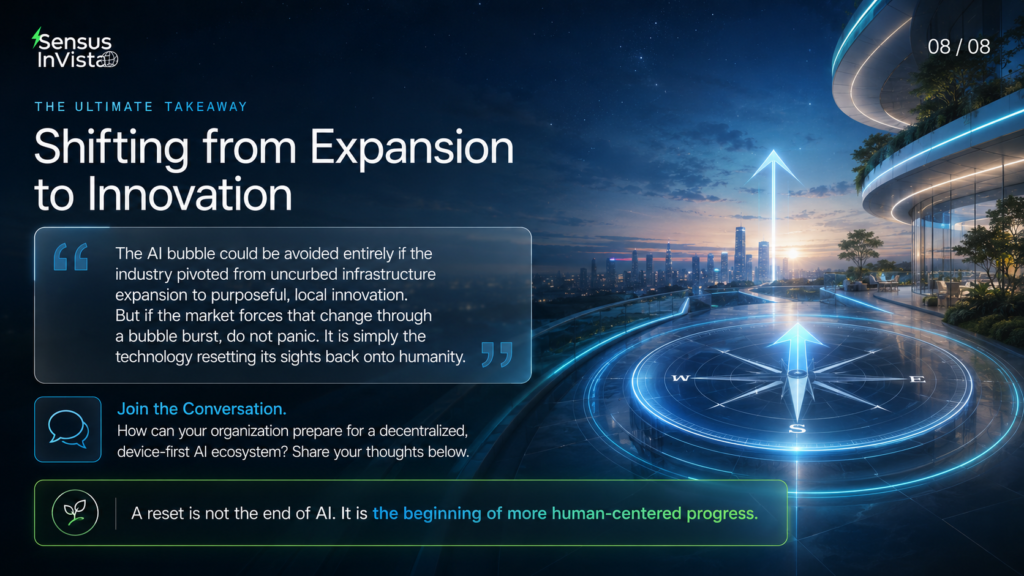
The bubble could be avoided
Key points
An AI bubble burst could potentially be circumvented if the direction changed towards innovation rather than expansion. However, this seems unlikely given the money and hype behind current approaches—which is precisely why it’s a bubble.
- An AI bubble burst could decentralise power from dominant players and encourage open source alternatives
- Disruption of data centre plans would benefit environmental and community health
- Workers could regain confidence if AI fails to deliver promised workplace benefits
- The focus should shift to AI as an assistive tool, not a dystopian automation threat
- Innovation should be prioritised over expansion, with device-first models protecting user rights
- AI development must consider humanity, civil liberties, and environmental impact
- More discernment in investment would result in less risky investment choices
- Smaller, more distributed investment across new businesses benefits smaller operations and startups
- Less focus on larger players with widely criticised technology
Further Reading:
- OECD — Artificial Intelligence Markets
- Brookings Institution — Market Concentration Implications of Foundation Models
- Stanford HAI — How Disruptive Is DeepSeek?
- Longpre et al. — Economies of Open Intelligence
- Open Source Initiative — Open Weights: Not Quite What You’ve Been Told
- International Energy Agency — Energy and AI
- UC Berkeley Law — Regulating Data Center Water Use in California
- University of Michigan — What Happens When Data Centers Come to Town?
- International Labour Organization — Generative AI and Jobs: A Global Analysis
- NBER — Generative AI at Work
- OECD — The Effects of Generative AI on Productivity, Innovation and Entrepreneurship
- Daron Acemoglu — The Simple Macroeconomics of AI
- Amnesty International — Unlawful by Design
- Ada Lovelace Institute — Rethinking Data and Rebalancing Digital Power
- UN Human Rights Office — Taxonomy of Human Rights Risks Connected to Generative AI
- Bank for International Settlements — Progress and Peril
- WIPO — AI Megadeals Fuel Venture Capital Rebound
- OECD — Venture Capital Investments in Artificial Intelligence through 2025
- IMF — Global Economic and Financial Implications of Artificial Intelligence
- Human Rights Watch — Addressing Artificial Intelligence in the Military Domain




2026 or 1984?: The Regulatory Siege of Data Sovereignty