
From Ethan James Farrell, Founder of Sensus InVista.
SparkPath: A Memory Layer for Repeatable AI Work
SparkPath emerged from observing an agentic workflow and realising that, while it was a task I had performed before and would perform again, I did not want to create a dedicated skill or include it in the instructions. I devised a seamless method to improve the efficiency of repeat tasks in agentic workflows. I am a user of Claude Code, OpenCode, and various other agents, including Hermes’s agent and Openclaw.
Sometimes tasks repeat, yet they are not significant enough to warrant inclusion in the instruction set as a standardised expectation. It is important that workflows play out naturally and heuristically, allowing the best solution or path to develop over time.
SparkPath functions as an independent layer, meaning it can be integrated quickly across tools and hosted locally on your machine for data privacy. It captures workflows in action and, with consent, stores completed tasks to enable more efficient repetition in future use cases. It improves over time and is based on findings from Agentic Context Engineering research, which led me to develop a framework for successfully capturing task components and requirements so that AI tools can improve task completions or align closely with user preferences over time, without feeling intrusive.
I continue to devote time to discovering more effective and innovative ways to use existing systems and tools. The SparkPath framework and system deliver efficiency in both time spent and token consumption, which reduces costs and potential LLM strain, particularly in local deployments.
It is available on GitHub. It combines the “mempalace” codebase with an agentic context engineering framework and is utilised via MCP, entirely locally. No account required. Feedback and experience always welcomed.
—
SparkPath Stores How You Like Work Done
Most AI assistants start each task from zero. You repeat the same instructions: tone, structure, checks, format, things to avoid.
SparkPath prevents that repetition. It stores a reusable recipe card for work you do more than once. It stores the useful path through the task: the steps that worked, the format you preferred, the checks that mattered, and how the result should look next time.
—
How MCP Fits In
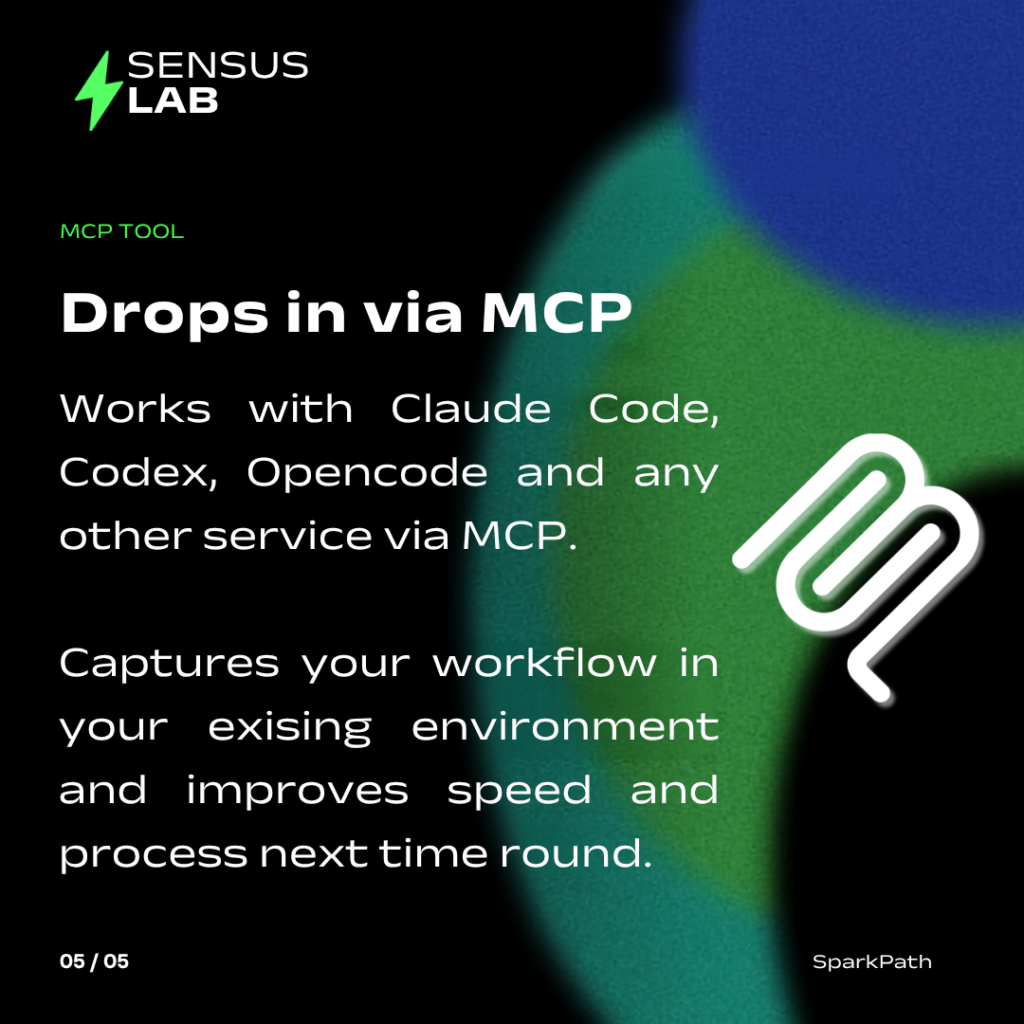
MCP is the Model Context Protocol. It is a standard connector for calling outside tools and services from an AI assistant.
In an agentic workflow, the AI plans, uses tools, checks results, and completes multi-step tasks. MCP connects the agent to external systems.
SparkPath is one of those systems. The agent calls SparkPath through MCP and asks: “Have we done a task like this before?”
SparkPath matches the task against stored procedures. A match returns a compact Procedure Card. The card tells the agent how to approach the task without you rewriting the whole briefing.
—
What This Looks Like In Practice
You ask your agent: “Summarise this meeting transcript in my usual format.”
With SparkPath, the agent calls SparkPath through MCP first. SparkPath matches the task against stored procedures. A match returns a short Procedure Card: “This is Ethan’s transcript-summary workflow. Use these sections, preserve terminology, remove filler only where safe, include follow-ups, and format it for reuse.”
You skip the long reminder about structure, sections, filler, product names, quotes, follow-ups, tone, polish, and headings.
Repeated instructions cost tokens, take time, and create room for inconsistency. SparkPath removes that overhead.
You explain less, correct less, and get useful output faster.
—
The Agentic Workflow
A typical SparkPath flow has five stages.
1. The agent prepares the task. It asks SparkPath whether an existing path exists for this kind of work.
2. SparkPath either finds a match or lets the agent continue. A match returns a small instruction block.
3. The agent completes the task using that guidance.
4. The agent logs what happened: what worked, what needed correction, what to remember next time.
5. You decide whether to save or update the procedure for next time.
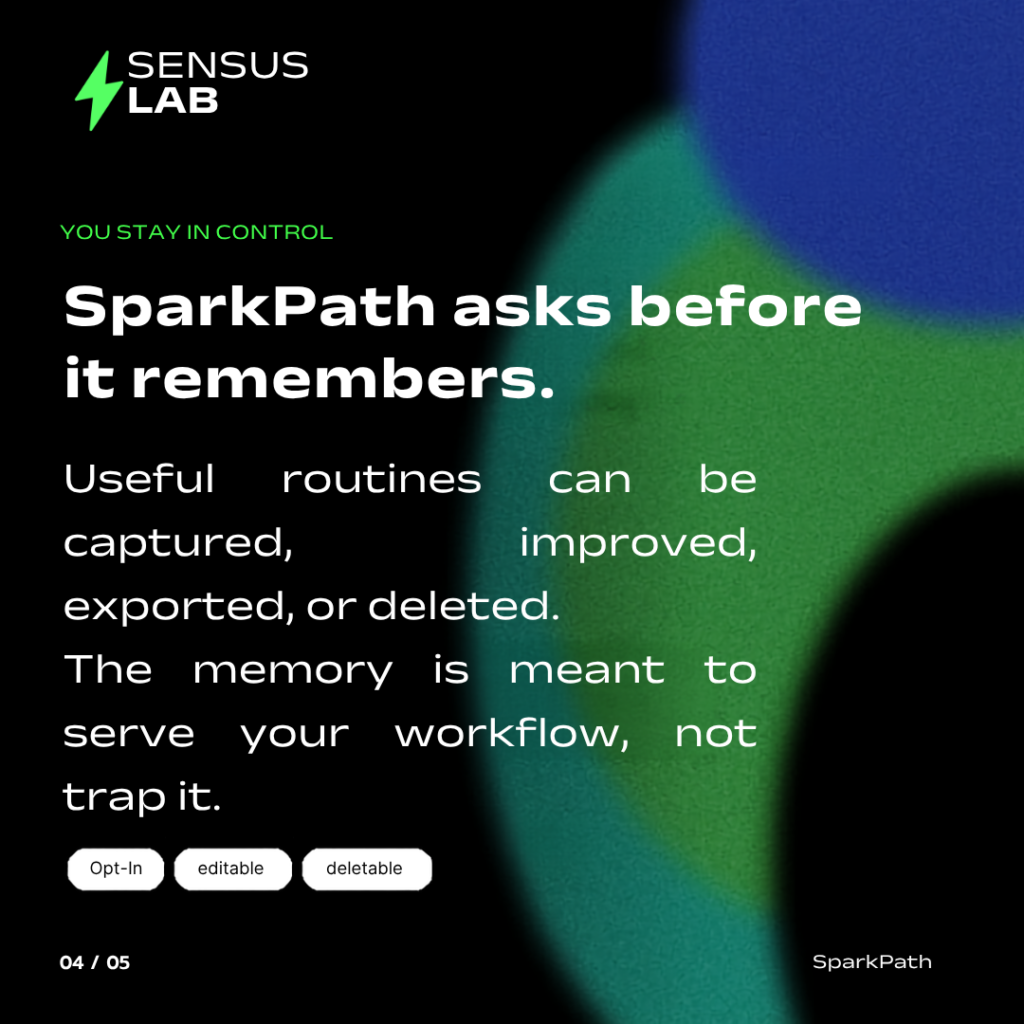
You stay in control. You can capture, refine, export, deprecate, or delete useful procedures. SparkPath does not record every task automatically.
—
Why This Is More Efficient
AI systems charge and slow down by how much text they process. We call those pieces tokens.
If you paste the same long instructions into every repeated task, the model spends tokens rereading the method instead of focusing on the work.
SparkPath replaces repeated briefing with a compact shortcut.
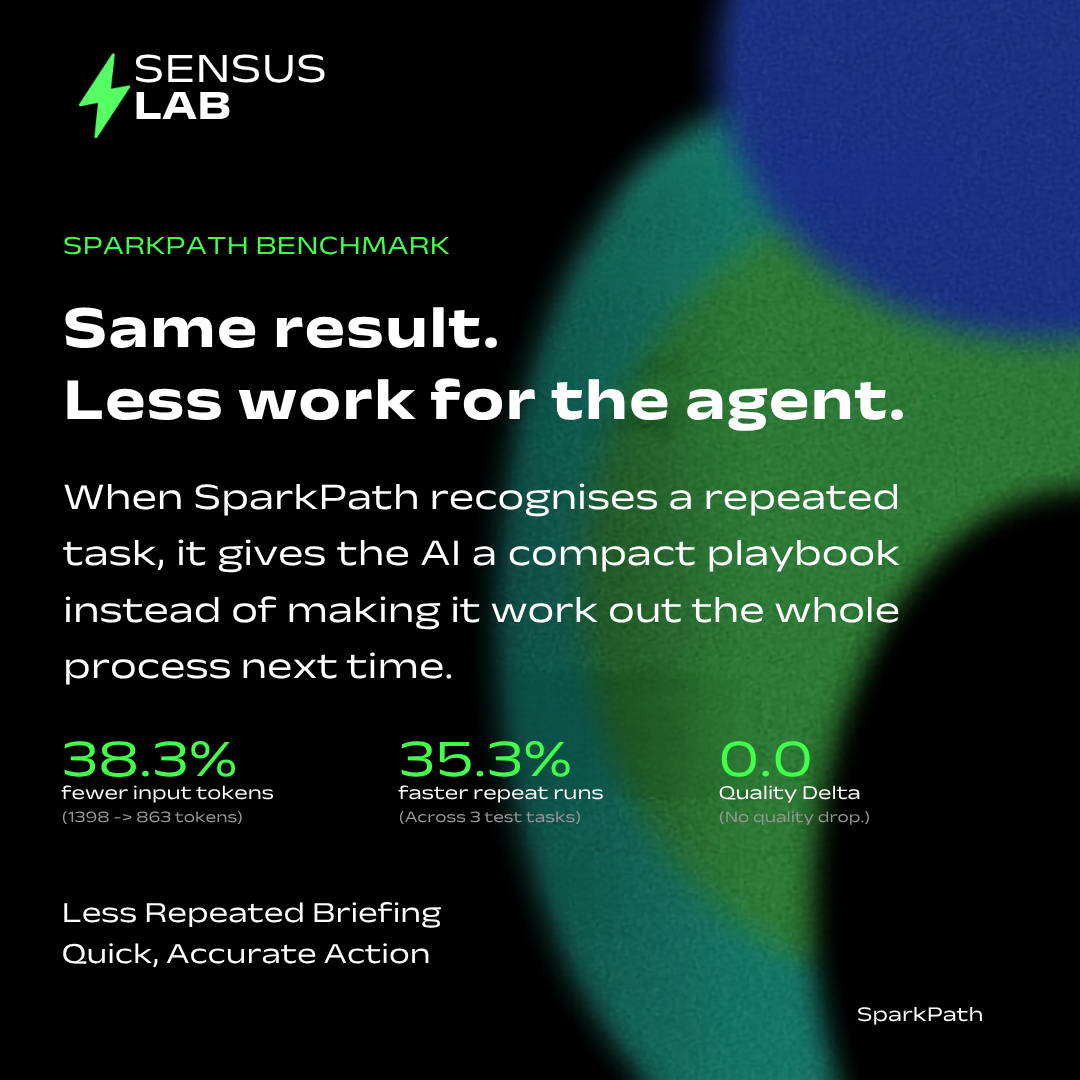
In the local SparkPath benchmark, repeated-task runs showed:
• 38.3% fewer input tokens
• 35.3% lower latency
• 0.0 quality delta
• largest shortcut injection of 303 tokens, under a 1,200 token budget
*That benchmark used a deterministic local test harness, not a full production LLM quality study. Treat the numbers as early evidence, not a universal guarantee. The direction matters: when the agent reuses the right procedure, it has less to reread and less to rediscover.
—
Why This Matters For Agentic AI
Agentic systems handle multi-step work. That work becomes expensive when every run forces the model to re-plan the same process.
SparkPath shortens the starting point. The agent asks, “Has this user already shown me a way they like?” before planning from scratch.
The assistant learns your working patterns. You write fewer prompts. Teams turn approved workflows into reusable runbooks. Products deliver consistent, personal AI experiences that cost less to run.
—
The Plain-English Summary
• SparkPath is a memory layer for repeatable AI work.
• MCP connects the agent to SparkPath.
• ACE learns from completed tasks, improves the procedure, and keeps the useful parts compact.
Together, they store how you like the work done.
—
Sources
Zhang, Q., Hu, C., Upasani, S., Ma, B., Hong, F., Kamanuru, V., Rainton, J., Wu, C., Ji, M., Li, H., Thakker, U., Zou, J. and Olukotun, K., 2025. Agentic Context Engineering: Evolving Contexts for Self-Improving Language Models. arXiv preprint arXiv:2510.04618. Available at: https://arxiv.org/abs/2510.04618.
Model Context Protocol docs, MCP tools specification, and local SparkPath benchmark notes in “data/report.md.”




Hi, this is a comment.
To get started with moderating, editing, and deleting comments, please visit the Comments screen in the dashboard.
Commenter avatars come from Gravatar.